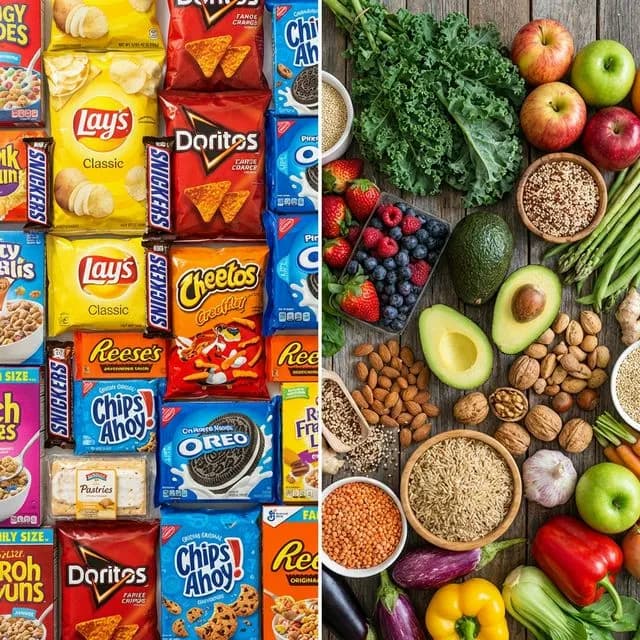
Ultra-Processed Food:
How to Identify and Replace It
Meaningful Diet Editorial
February 11, 2026 · 10 min read
Ultra-processed foods now make up approximately 60% of the calories consumed in the United States. A landmark 2024 meta-analysis in the BMJ linked high ultra-processed food consumption to 32 adverse health outcomes, including a 50% higher risk of cardiovascular death, a 48–53% higher risk of anxiety and depression, and a 12% higher risk of type 2 diabetes.
But what exactly makes a food "ultra-processed"? It's not as simple as "anything in a package." The answer lies in a classification system developed by Brazilian researchers that has reshaped how nutritionists think about food.
The NOVA Classification System
The NOVA system, developed by Dr. Carlos Monteiro at the University of São Paulo, classifies all food into four groups based on the degree and purpose of processing:
Unprocessed / Minimally Processed
Fresh fruits, vegetables, eggs, meat, milk, legumes, nuts, seeds. Nothing added, nothing removed.
Processed Culinary Ingredients
Olive oil, butter, honey, salt, flour. Substances extracted from Group 1 foods used in cooking.
Processed Foods
Canned vegetables, artisan cheese, cured meats, sourdough bread. Group 1 foods modified with Group 2 ingredients.
Ultra-Processed Foods (UPFs)
Industrial formulations with 5+ ingredients including additives never found in a home kitchen: high-fructose corn syrup, hydrogenated oils, modified starches, emulsifiers, artificial flavors.
Why Ultra-Processed Foods Are Harmful
They Override Your Satiety System
UPFs are engineered to be hyper-palatable, hitting a "bliss point" of salt, sugar, and fat that overrides your body's natural fullness signals. A NIH study by Dr. Kevin Hall found that people eating ultra-processed diets consumed 500 more calories per day and gained weight compared to an unprocessed diet with identical available macros. This ties directly into the protein leverage hypothesis. UPFs dilute protein content, keeping your body searching for more.
They Damage the Gut Lining
Emulsifiers like polysorbate 80 and carboxymethylcellulose, found in ice cream, salad dressings, and baked goods, have been shown to erode the mucus layer of the intestine, promoting gut bacterial imbalance and endotoxemia (bacterial toxins leaking into the bloodstream). This triggers systemic inflammation.
They Spike Blood Sugar
Most UPFs are designed for rapid digestion, the processing pre-breaks food structures, creating a much faster glycemic response than the whole-food equivalent. A whole apple has a GI of ~36; apple juice made from concentrate hits 46+; an apple-flavored fruit snack exceeds 70.
They Contain Industrial Seed Oils
Nearly every UPF contains refined seed oils as a primary ingredient. Soybean oil alone now constitutes the largest single source of calories in the American diet.
The Label Test: How to Spot UPFs
Here's a simple heuristic: if the ingredient list contains substances you would never use in a home kitchen, it's ultra-processed. Watch for:
- Names you can't pronounce: Maltodextrin, sodium stearoyl lactylate, TBHQ
- Flavor engineering: "Natural flavors," "artificial flavors," or multiple sweetener types
- Protein isolates: Soy protein isolate, whey protein concentrate (vs. whole-food sources)
- Emulsifiers: Polysorbate, lecithin (when used as an additive, not a whole ingredient like eggs)
- 5+ ingredients where most are not recognizable foods
Practical Swaps: UPF → Whole Food
The goal is not perfection, it's progress. Here are the highest-impact swaps for replacing common UPFs:
Join 10,000+ people upgrading their kitchens
Replace any ultra-processed ingredient instantly.
Our AI Swap Tool is the most popular free tool on the site, type any ingredient, get a whole-food alternative in seconds. No sign-up required, unlimited swaps, always free.
Use the Swap Tool →