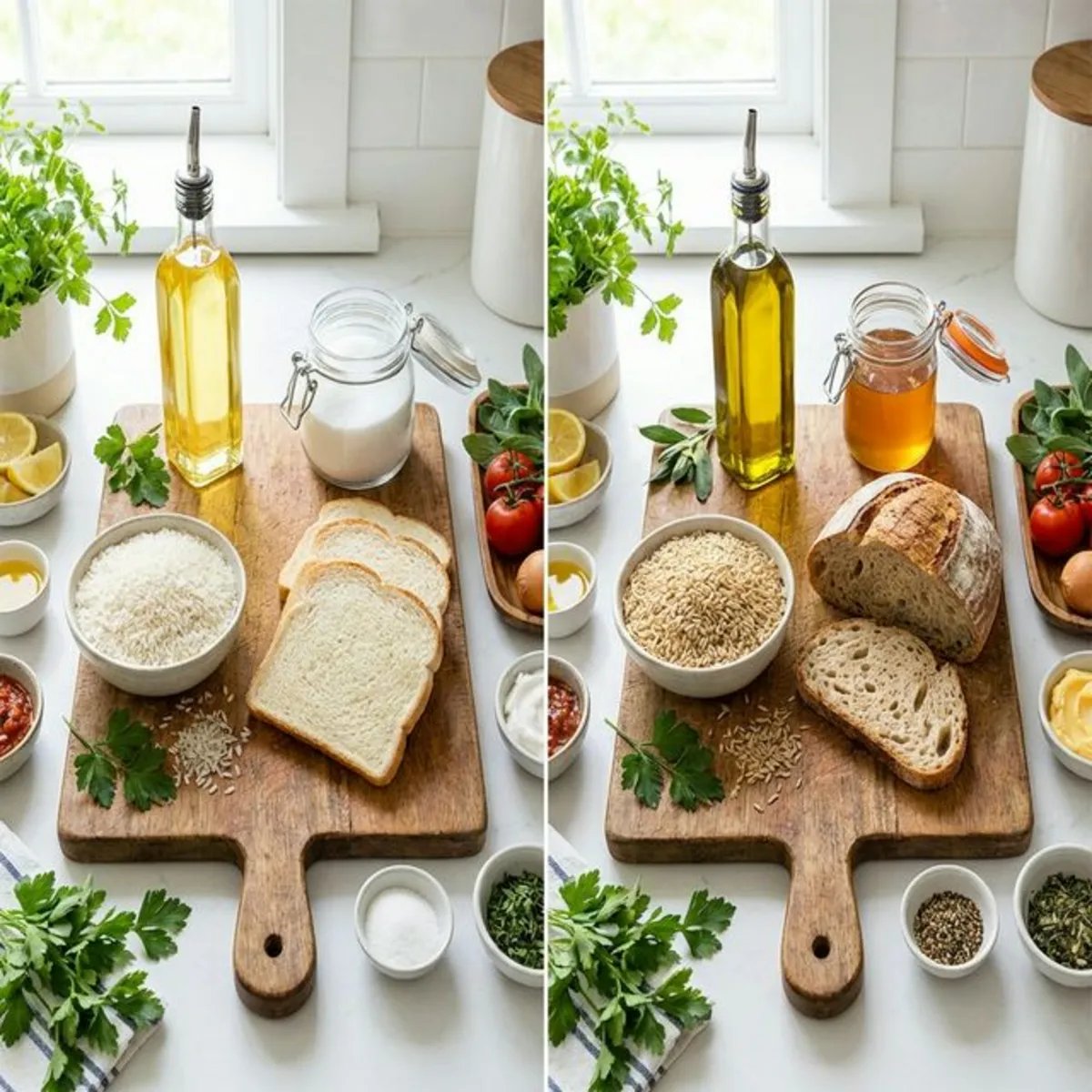
10 Simple Ingredient Swaps
That Make Any Meal Healthier
Meaningful Diet Editorial
February 15, 2026 · 7 min read
You don't need a complete diet overhaul to eat better. Most of the time, the biggest nutritional wins come from swapping a handful of everyday ingredients for more nutrient-dense alternatives. Same meals, same recipes, dramatically better nutrition.
Here are 10 swaps you can make this week, each one backed by nutritional science, each one practical enough to stick with permanently. And when you're ready, our free AI Swap Tool can generate personalized swaps for any ingredient in your kitchen.
1. White Rice → Cauliflower Rice (or Brown Rice)
White rice is essentially pure starch with the nutrient-rich bran and germ removed. Cauliflower rice delivers just 25 calories per cup (vs. 200+), adds fiber and vitamin C, and absorbs flavors beautifully. If you still want the grain, brown rice retains its bran layer, providing 3.5g of fiber and significantly more magnesium, phosphorus, and B vitamins per serving.
2. Canola Oil → Extra Virgin Olive Oil
This is the single highest-leverage swap in most kitchens. Canola oil is a highly refined, industrially processed seed oil with fragile polyunsaturated fats that oxidize easily under heat. Extra virgin olive oil is rich in stable monounsaturated oleic acid and contains powerful polyphenols like oleocanthal, which has documented anti-inflammatory properties. Use it for everything below smoking point, dressings, sautéing, roasting.
3. White Sugar → Raw Honey or Maple Syrup
Refined white sugar is nutritionally empty, pure sucrose with zero micronutrients. Raw honey contains enzymes, antioxidants, and trace minerals, plus has a lower glycemic index (GI ~50 vs. sugar's 65). Pure maple syrup adds manganese, zinc, and riboflavin. Both sweeten effectively at lower quantities because of their more complex flavor profiles.
4. Store-Bought Salad Dressing → Olive Oil + Lemon
Most bottled dressings are secretly one of the biggest seed oil delivery systems in your fridge. Check the label: soybean oil is almost always the first ingredient. A simple vinaigrette of extra virgin olive oil, fresh lemon juice, salt, pepper, and a touch of Dijon mustard takes 30 seconds to make and eliminates a major hidden source of inflammatory fats.
5. Instant Oatmeal → Steel-Cut Oats
Instant oatmeal packets are heavily processed and often loaded with sugar, some brands pack 12g per serving. Steel-cut oats have a glycemic index of 42 vs. 83 for instant varieties. They digest more slowly, keeping blood sugar stable and energy sustained. Add walnuts and berries for protein leverage and additional antioxidants.
6. Table Salt → Celtic or Himalayan Sea Salt
Standard table salt is stripped of trace minerals and often contains anti-caking agents like sodium aluminosilicate. Celtic sea salt and Himalayan pink salt retain over 80 trace minerals including magnesium, potassium, and calcium. You often need less because the mineral complexity creates a fuller, more satisfying saltiness.
7. Conventional Peanut Butter → Almond Butter (or Natural PB)
Most conventional peanut butters contain hydrogenated oils (seed oils again), added sugar, and palm oil. Natural almond butter provides more fiber, more vitamin E, more magnesium, and a better omega-6 to omega-3 ratio. If you prefer peanut butter, simply switch to a brand whose only ingredients are "peanuts" and optionally "salt."
8. White Bread → Sourdough or Sprouted Grain
White bread spikes blood sugar almost as fast as pure glucose. Sourdough fermentation breaks down phytic acid (improving mineral absorption) and creates organic acids that slow glucose release. Sprouted grain breads like Ezekiel 4:9 go further, the sprouting process increases bioavailable protein, folate, and vitamin C.
9. Protein Bars → Hard-Boiled Eggs + Fruit
Most protein bars are ultra-processed foods disguised as health products, full of seed oils, maltitol, soy protein isolate, and long ingredient lists. Two hard-boiled eggs with a piece of fruit deliver 12g of complete protein, healthy fats, choline, B12, and natural fiber with exactly two ingredients.
10. Iceberg Lettuce → Leafy Greens (Spinach, Kale, Arugula)
Iceberg lettuce is 96% water with minimal nutritional value. Spinach delivers 56× more vitamin A, dark kale provides 20× more vitamin K, and arugula adds peppery flavor with glucosinolates, compounds linked to cancer prevention. A simple swap that transforms every salad from empty filler to nutritional powerhouse.
Over 10,000 swaps and counting
Get your own personalized swaps, free, instant, unlimited.
Our AI-powered Swap Tool has helped thousands of people upgrade their kitchens. Type any ingredient and get a science-backed, nutrient-dense alternative in seconds. No account needed.
Use the Swap Tool →