Gut Health & the Microbiome:
Foods That Actually Work
Meaningful Diet Editorial
February 9, 2026 · 9 min read
Your gut is not just where food goes to be digested. It's a 30-foot ecosystem containing roughly 38 trillion microorganisms, more cells than exist in your entire human body. These bacteria collectively weigh about 4 pounds and influence everything from your immune system (70% of which lives in your gut) to your mood, weight, and even your cravings.
The emerging science is clear: feeding the right bacteria the right foods is one of the most powerful health interventions available. Here's what actually works.
The Two Pillars: Probiotics and Prebiotics
Think of your microbiome like a garden. Probiotics are the beneficial bacteria themselves, the seeds you plant. Prebiotics are the fiber-rich foods that feed those bacteria, the fertilizer that helps them thrive. You need both.
The Best Probiotic Foods
1. Sauerkraut (Unpasteurized)
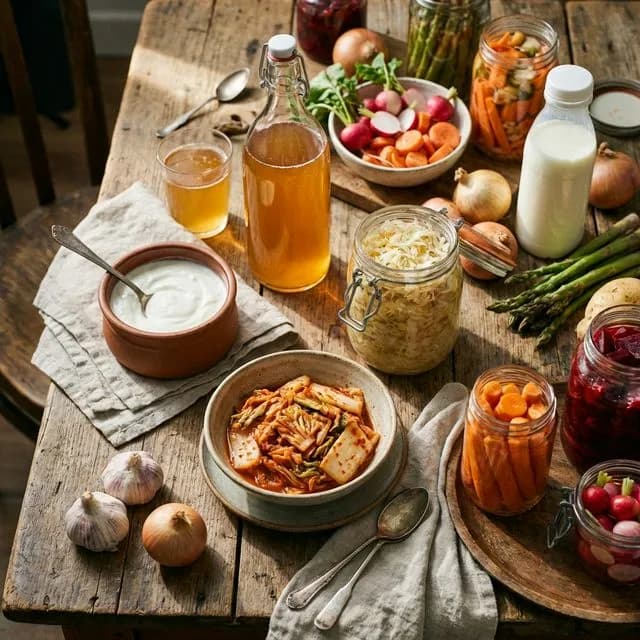
Traditional lacto-fermented sauerkraut is one of the richest probiotic foods available. A single tablespoon can contain billions of diverse Lactobacillus strains. The key is "unpasteurized", pasteurization kills the living bacteria. Look for it in the refrigerated section, not the shelf-stable aisle. Bonus: the fermentation process increases the bioavailability of the cabbage's vitamin C and creates vitamin K2.
2. Kimchi
Korea's national dish is a fermentation powerhouse. The combination of napa cabbage, garlic, ginger, and chili creates a uniquely diverse microbial ecosystem. Studies have linked regular kimchi consumption to reduced body fat, improved cholesterol, and reduced inflammatory markers. A few tablespoons daily is a meaningful dose.
3. Full-Fat Yogurt and Kefir
Choose unsweetened, full-fat varieties with live active cultures. Kefir is even more probiotic-dense than yogurt, it contains up to 61 different strains of bacteria and yeasts versus yogurt's typical 2–7. The fat helps you absorb the fat-soluble vitamins and provides satiety that supports protein leverage. Avoid flavored varieties, they're ultra-processed and loaded with sugar.
4. Miso
This fermented soybean paste is a staple in Japanese cuisine and a rich source of Aspergillus oryzae, a beneficial fungus that produces enzymes aiding digestion. Add miso to soups, dressings, and marinades at the end of cooking (heat destroys the living cultures).
The Best Prebiotic Foods
Prebiotics are specific types of fiber that human enzymes cannot break down, so they pass through to the colon where beneficial bacteria ferment them into short-chain fatty acids (SCFAs), particularly butyrate, which is the primary fuel for your colon cells.
1. Garlic and Onions
Rich in inulin and fructooligosaccharides (FOS), garlic and onions are among the most potent prebiotic foods. Raw garlic also contains allicin, a sulfur compound with antimicrobial properties that selectively targets pathogenic bacteria while sparing beneficial ones.
2. Asparagus
Contains up to 5% inulin by weight, making it one of the highest natural prebiotic sources. Asparagus also provides folate, vitamin K, and the antioxidant glutathione. Lightly steaming preserves both the prebiotic fiber and nutrient content.
3. Resistant Starch
When you cook and then cool starchy foods, rice, potatoes, oats, the starch crystallizes into "resistant starch" that your gut bacteria can ferment. This is one of the easiest microbiome interventions: cook a batch of rice or potatoes, refrigerate them, and reheat when ready. You get up to 2.5× more resistant starch from cooled-then-reheated rice compared to freshly cooked. This also lowers the glycemic response.
4. Walnuts and Flaxseeds
Walnuts contain ellagitannins that gut bacteria convert into urolithins, compounds with documented anti-inflammatory and anti-aging effects. Ground flaxseeds provide lignans and mucilage fiber that supports the growth of Bifidobacterium species.
Foods That Harm Your Microbiome
- Emulsifiers in UPFs. Polysorbate 80 and carboxymethylcellulose directly thin the protective mucus layer of the gut
- Artificial sweeteners. Sucralose, aspartame, and saccharin have been shown to reduce microbial diversity and alter gut bacteria composition
- Refined seed oils. Excess omega-6 fatty acids from industrial seed oils promote the growth of pro-inflammatory bacterial species
- Excess alcohol. Disrupts the tight junction proteins that hold the gut barrier together
- Low-fiber diets. Without prebiotic fiber, beneficial bacteria literally starve and your microbiome diversity collapses
A Simple Daily Gut Protocol
You don't need supplements or expensive functional foods. Here's a practical approach:
- Morning: Full-fat yogurt or kefir with ground flaxseed
- Lunch: Include a serving of fermented food (kimchi, sauerkraut, or miso soup)
- Cooking: Use garlic and onions liberally as a base for most meals
- Dinner: Include resistant starch (cooled potatoes, reheated rice)
- Snacking: Walnuts, berries, and vegetables with fiber, swap out ultra-processed snacks
The web's most popular free nutrition tool
Swap gut-harming ingredients for microbiome-friendly alternatives.
Thousands of people use our free AI Swap Tool every week to upgrade their ingredients. Type anything from your pantry and get a nutrient-dense, gut-friendly alternative in seconds.
Use the Swap Tool →